
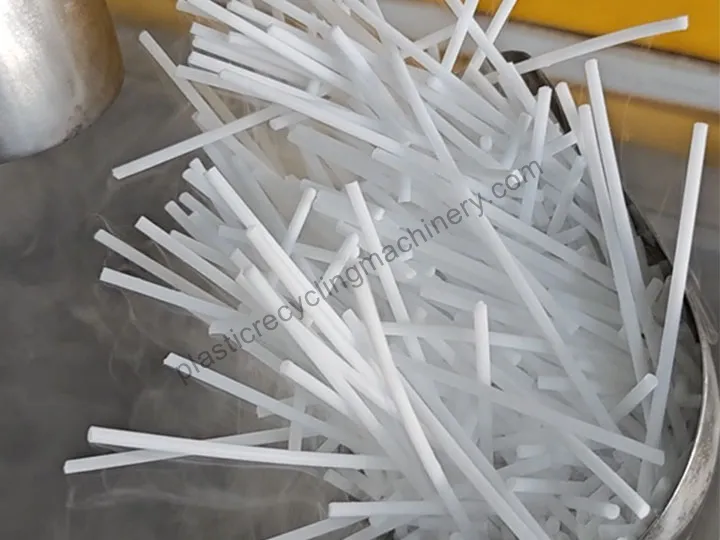
In the modern food industry, maintaining product freshness during transportation has become one of the most critical challenges. From seafood and meat to dairy products and frozen foods, temperature control directly determines product quality and commercial value.
Among various cooling methods, dry ice pellets have become one of the most efficient solutions for cold chain transportation due to their extremely low temperature (-78.5°C), clean sublimation process, and stable cooling performance.
However, many cold chain companies are now facing a key question:
How can dry ice be produced efficiently, consistently, and at a lower cost?
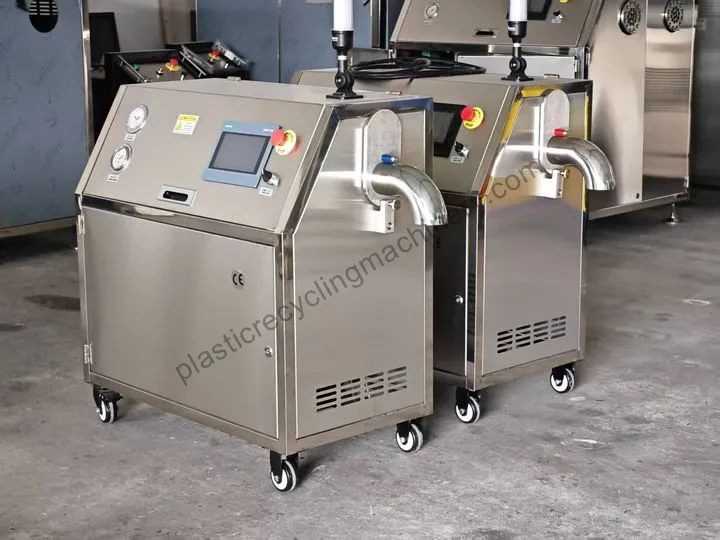
This is where the 干冰颗粒机 plays an essential role.
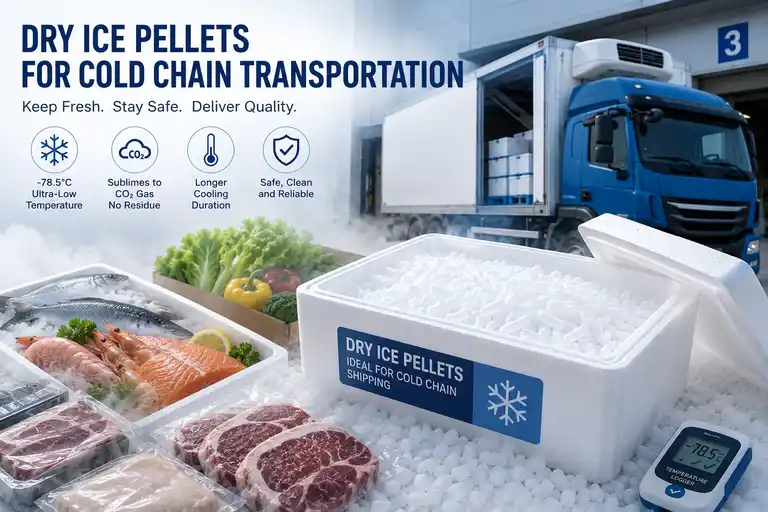
Why Dry Ice Pellets Are Ideal for Food Cold Chain Transportation
Compared with traditional ice, dry ice pellets offer several significant advantages:
1. Extremely Low Temperature for Faster Cooling
Dry ice sublimates at -78.5°C, which allows food products to be cooled rapidly during transportation. This is especially important for:
- Fresh seafood
- Meat and poultry
- Ice cream and frozen desserts
- Dairy products
Rapid cooling helps slow down bacterial growth and preserves food quality for a longer time.
2. No Water Residue During Transportation
Unlike regular ice, dry ice does not melt into water. Instead, it directly turns into carbon dioxide gas.
This means:
- No water damage to packaging
- No contamination of food products
- Cleaner transportation environment
This is particularly important for export logistics and long-distance cold chain shipping.
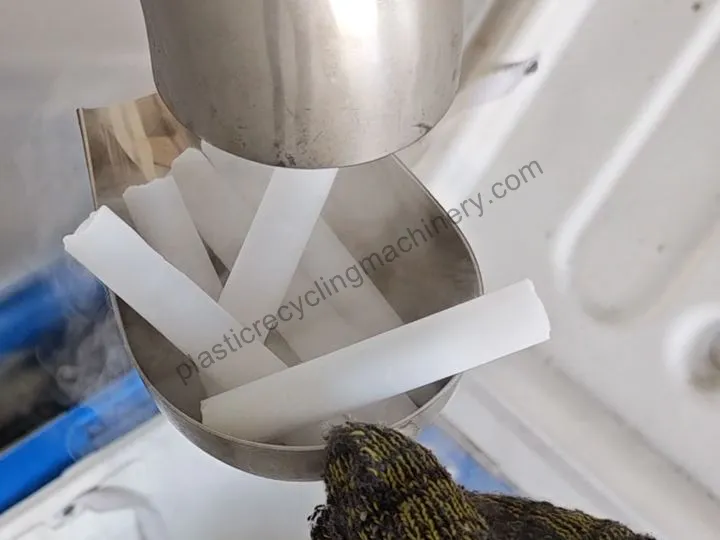
3. Longer Cooling Duration
Dry ice sublimates slowly under proper insulation conditions, providing a stable cooling effect throughout the entire transportation process. This reduces the risk of temperature fluctuations that may damage sensitive food products.
The Challenge: High Demand for Stable Dry Ice Supply
As demand for cold chain logistics continues to grow, many companies face a common issue:
- Unstable dry ice supply from external vendors
- High purchasing cost in long-term operations
- Inconsistent pellet size affecting cooling efficiency
- Delivery delays impacting logistics schedules
These problems directly affect operational stability and profit margins
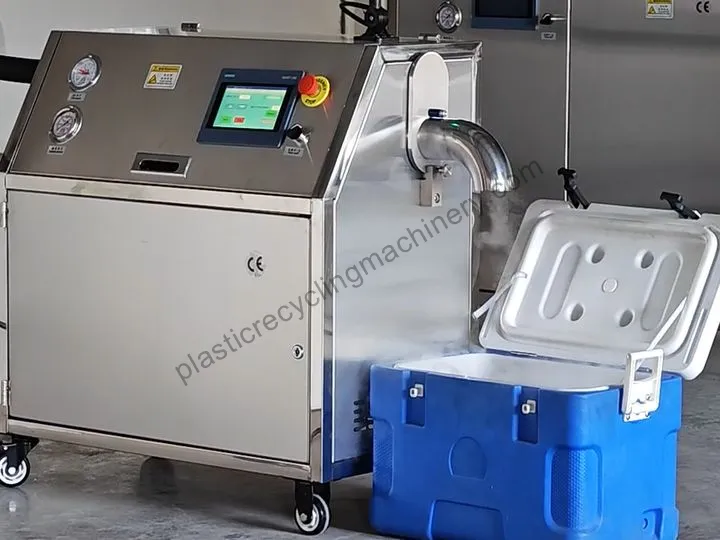
The Solution: On-Site Production with Dry Ice Pellet Machine
To solve these challenges, more and more food logistics companies are choosing to produce dry ice in-house using a dry ice pelletizer.
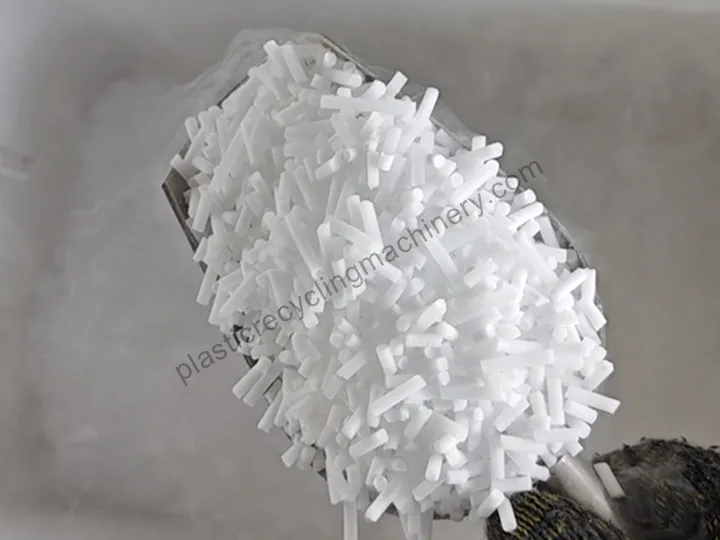
A dry ice machine converts liquid CO₂ into high-density dry ice maker pellets, typically in 3mm or customized sizes, suitable for cold chain applications.
Key advantages of using a dry ice pellet maker:
- Stable and continuous dry ice production
- Adjustable pellet size (commonly 3mm, 16mm, etc.)
- Reduced long-term operational cost
- On-demand production, no storage loss
- Better control of cold chain quality
By producing dry ice internally, companies can significantly improve supply reliability and reduce dependency on external suppliers.
Cost Efficiency: A Long-Term Investment
Although purchasing dry ice externally may seem convenient, long-term operations often reveal hidden costs:
- High per-unit dry ice price
- Transportation and handling fees
- Product loss due to delayed delivery
- Inefficient cooling performance
By investing in a 干冰颗粒制造机, companies can produce dry ice on demand, significantly reducing overall operating costs and improving ROI over time.
结论
Dry ice pellets have become an essential cooling solution in modern food cold chain transportation due to their efficiency, cleanliness, and stability. However, relying solely on external supply is no longer the most cost-effective approach for growing logistics companies.
With a dry ice pellet machine, businesses can achieve:
- Stable dry ice supply
- Lower operational costs
- Higher cold chain efficiency
- Better product quality control
If you are looking for a reliable and efficient solution for dry ice production, our dry ice pelletizer can help you build a more stable and profitable cold chain system.
Feel free to contact us for more technical details, capacity options, and customized solutions.