
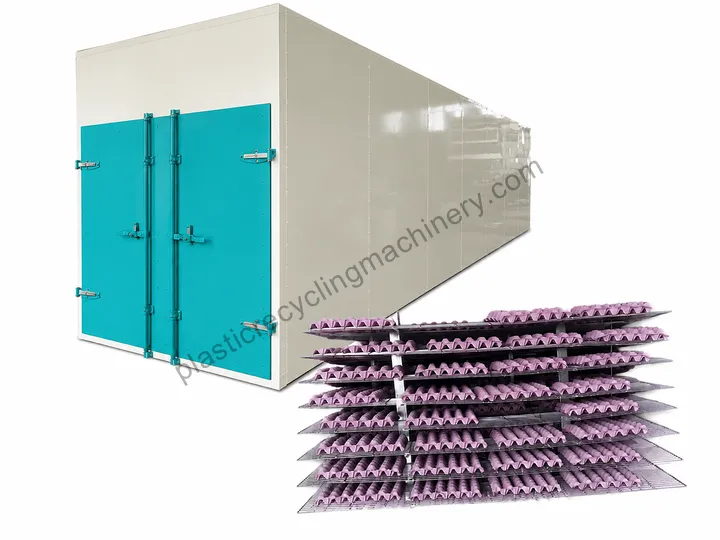
If you are planning to set up a paper egg tray production line, the egg tray drying system is an important part to consider. Freshly molded paper egg trays still contain a considerable amount of water and cannot be directly stacked and packed. They need to be properly dried first.
So, which drying method is suitable for your egg trays? What are the differences between sun drying, drying boxes, brick-built drying systems, and multi-layer metal drying systems? Which one is better for your production capacity and factory space?
We can recommend a suitable egg tray drying solution according to your production capacity, factory space, local climate, labor costs, and available fuel.
What Is an Egg Tray Drying System?
The drying system is used in a paper egg tray production line to remove moisture from freshly molded paper egg trays.
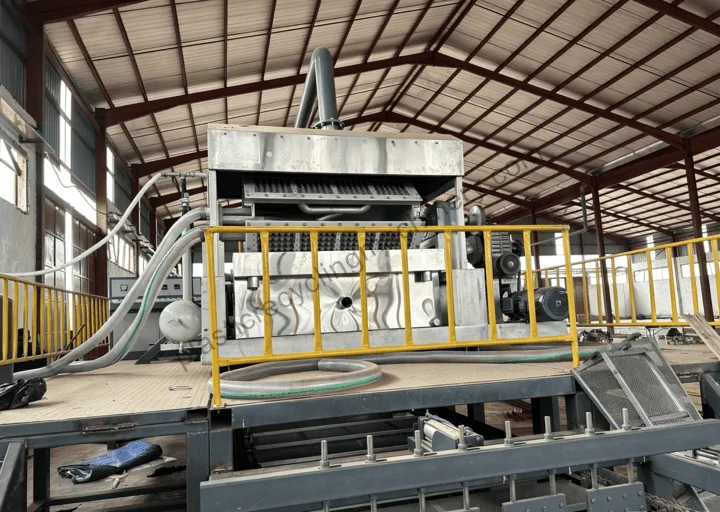
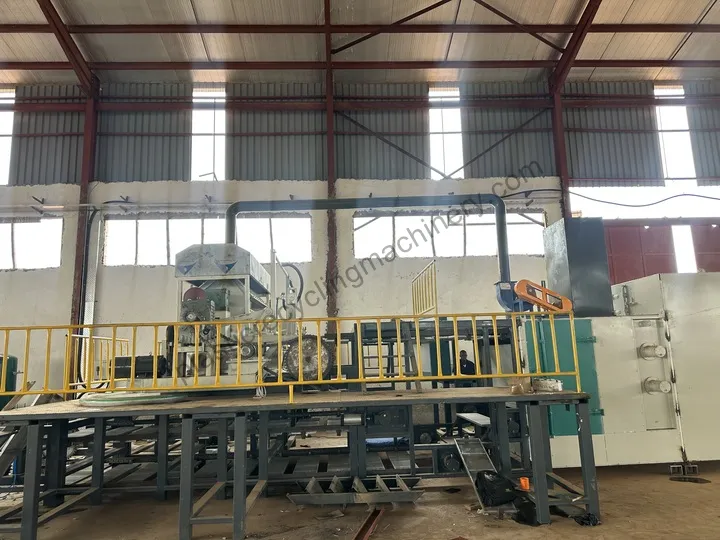
During the production process, waste paper is pulped and mixed with water before entering the egg tray forming machine. The forming machine uses vacuum suction and dewatering to form wet egg trays on the molds. Compressed air then transfers the molded trays to a conveyor or tray system before they enter the drying section.
The typical production process is:
Waste Paper → Pulping → Pulp Mixing → Egg Tray Forming → Egg Tray Drying → Stacking → Packing
In simple terms, the egg tray forming machine is responsible for forming the trays, while the Egg Tray Drying System is responsible for removing moisture. The two sections need to be properly matched according to the production capacity.
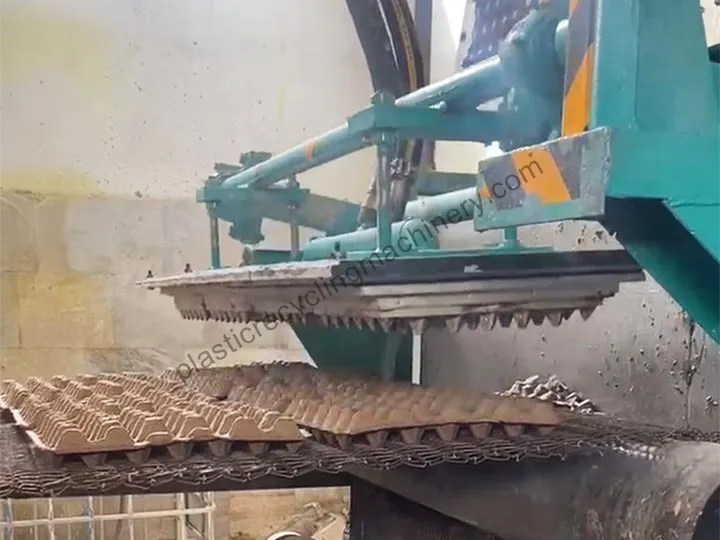
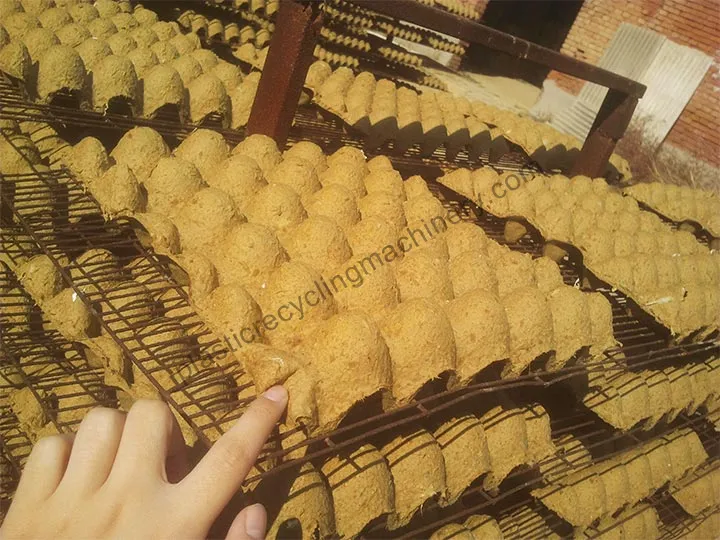
Why Do Paper Egg Trays Need Drying?
Freshly molded paper egg trays still contain a certain amount of moisture. If they are stacked immediately, they may deform and are not convenient for subsequent packing and transportation.
Therefore, drying is an important step in paper egg tray production.
A suitable egg tray drying system can help you:
- Remove moisture from freshly molded egg trays
- Improve the dryness of finished egg trays
- Prepare trays for stacking and packing
- Support continuous egg tray production
- Provide different drying solutions for different production conditions
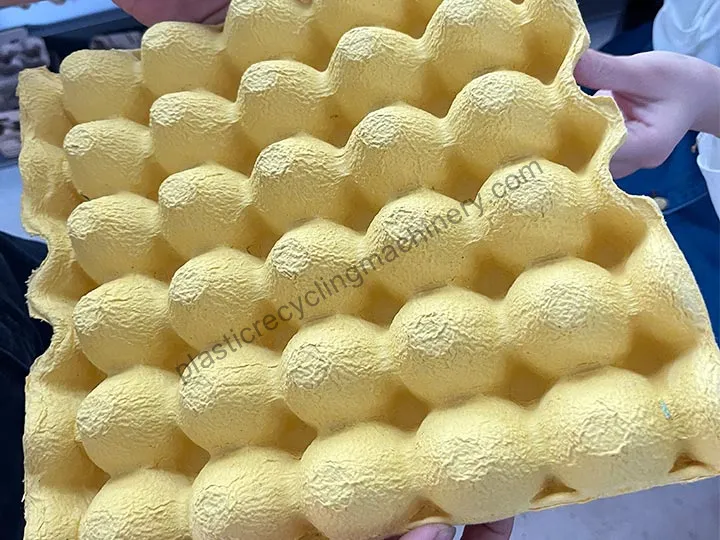
Egg Tray Drying Methods Provided by Shuliy
Different customers have different production conditions.
If your project is relatively small and the local climate is suitable for outdoor drying, sun drying can be a simple option.
If you want to reduce the influence of weather on production, you can consider an egg tray drying box.
For medium and large-scale egg tray production lines, brick-built drying systems or multi-layer metal drying systems can be selected according to the available factory space and production requirements.
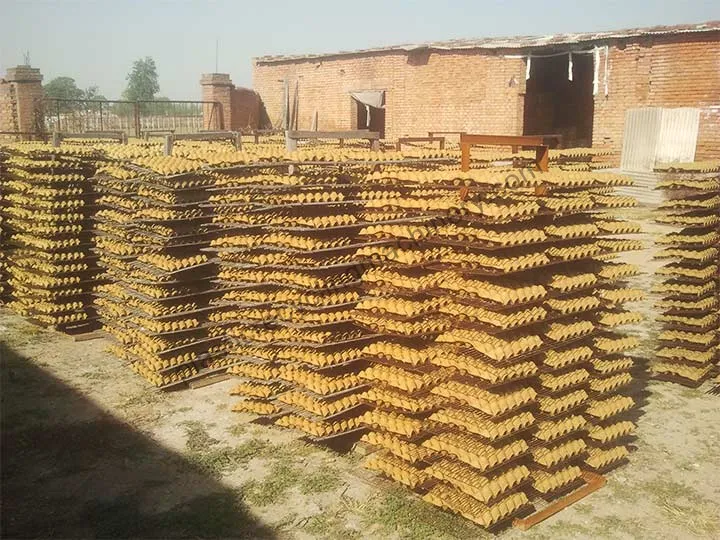
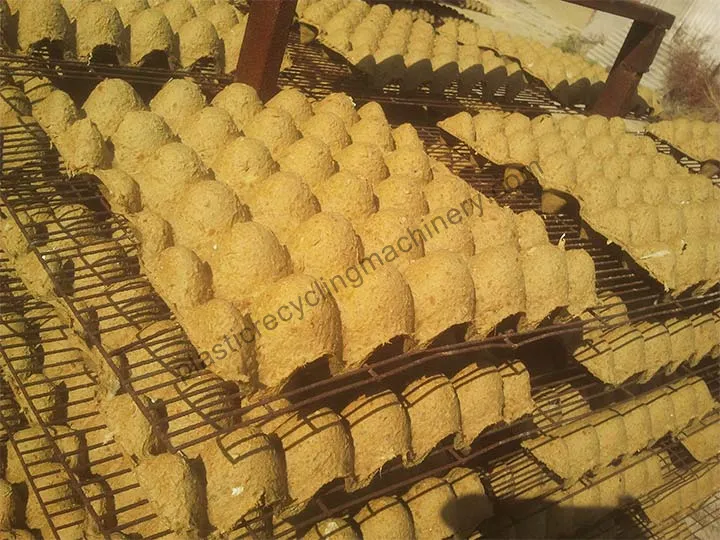
1. Sun Drying for Egg Trays
Sun drying is one of the simplest methods for drying paper egg trays.
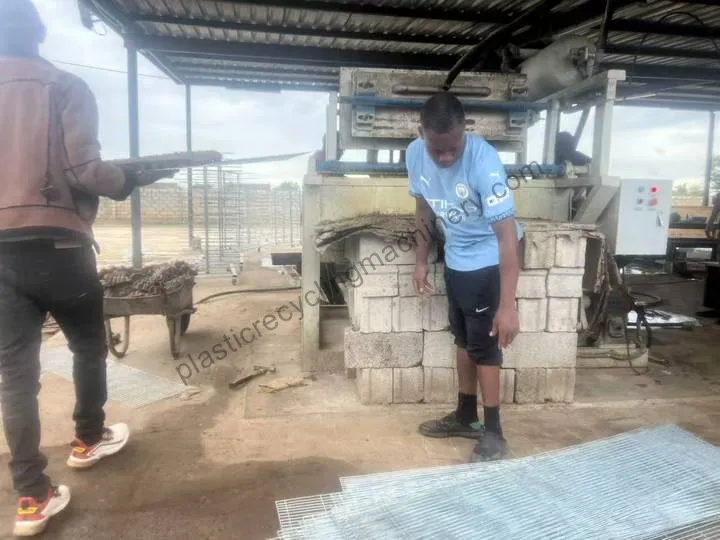
After forming, the wet egg trays are placed on bamboo or galvanized trays and then positioned on drying racks. The trays are dried naturally using sunlight and air.
This method does not require additional fuel for heating. Therefore, if you are located in an area with plenty of sunshine and stable weather, and you have sufficient open space, sun drying can help reduce drying energy costs.
Advantages
- No fuel required
- Simple drying method
- Low energy cost
- Relatively low equipment investment
Things to Consider
The main limitations of sun drying are weather and space.
Rain, high humidity, or consecutive cloudy days can slow down the drying process. At the same time, more labor is required to move and arrange the egg trays.
If you have sufficient open space and suitable local weather conditions, sun drying can be an economical option.
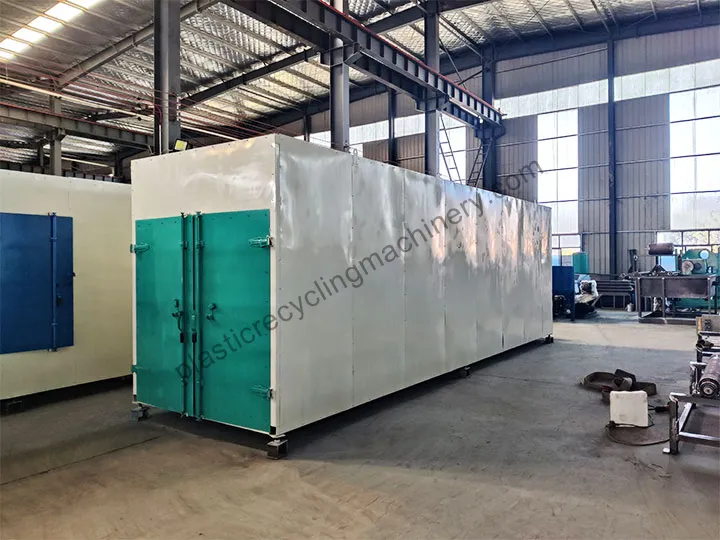
2. Egg Tray Drying Box
If you do not want egg tray production to be affected by weather, you can consider an Egg Tray Drying Box.
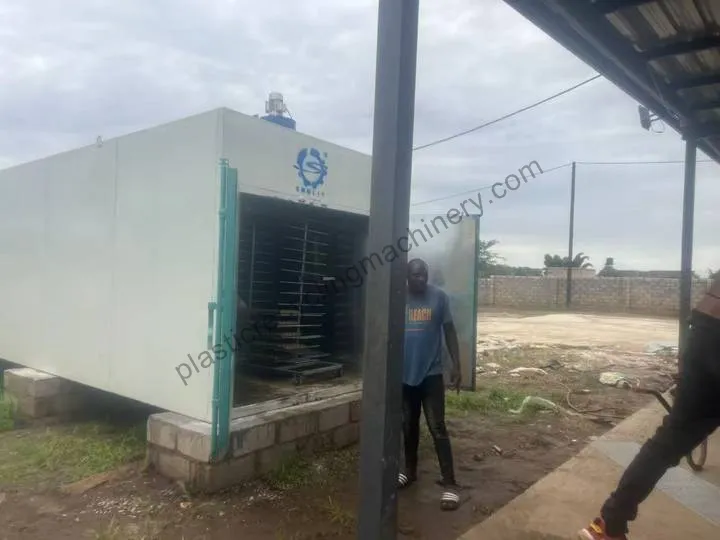
The wet egg trays are placed on galvanized trays and loaded onto carts. The carts are then pushed into the drying box for heated drying.
A drying box can generally accommodate approximately 10–12 carts, with around 90–100 egg trays per cart. The drying time is approximately 30 minutes.
Why Choose a Drying Box?
Compared with sun drying, the biggest advantage of a drying box is:
Rain does not necessarily mean that production has to stop.
The enclosed drying environment reduces the impact of weather on production, while the required space is smaller than that needed for large-scale outdoor sun drying.
However, this solution requires workers to move the carts in and out and load and unload the egg trays. Therefore, it is more suitable for production projects that do not require a very high level of automation.
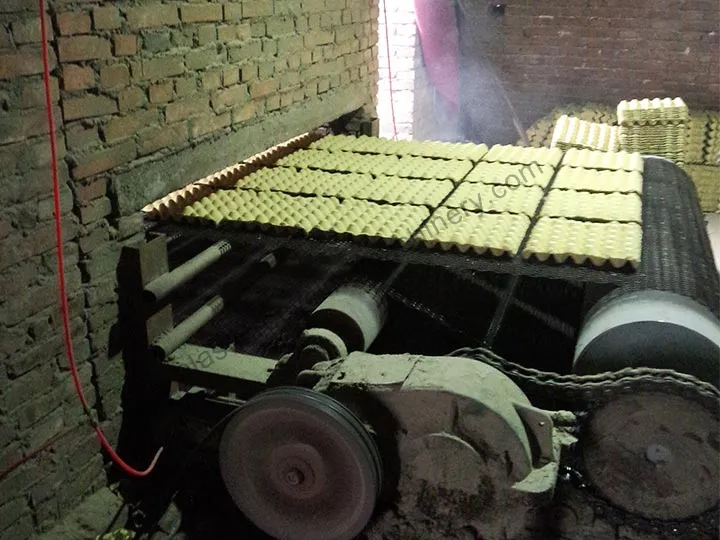
3. Brick-Built Egg Tray Drying System
For higher-capacity egg tray production lines, you can consider a brick-built egg tray drying system.
This system normally uses a drying tunnel constructed at the customer’s factory. Wet egg trays enter the drying tunnel through a conveyor and are continuously dried in a heated environment.
The drying temperature is approximately 180–200°C, and the drying time is around 15 minutes. The drying tunnel is generally about 40–70 meters long.
Depending on local conditions, the heating system can use:
- Coal
- Wood
- Natural gas
- Diesel
Who Is Brick-Built Drying Suitable For?
If you plan to build a medium or large-scale egg tray production line and have sufficient factory space, a brick-built drying system is worth considering.
Compared with a multi-layer metal drying system, its construction cost is relatively lower, and it can also be combined with a conveyor system for continuous production.
However, this solution requires a relatively long installation area. Therefore, it is better to provide your factory dimensions before finalizing the drying system.
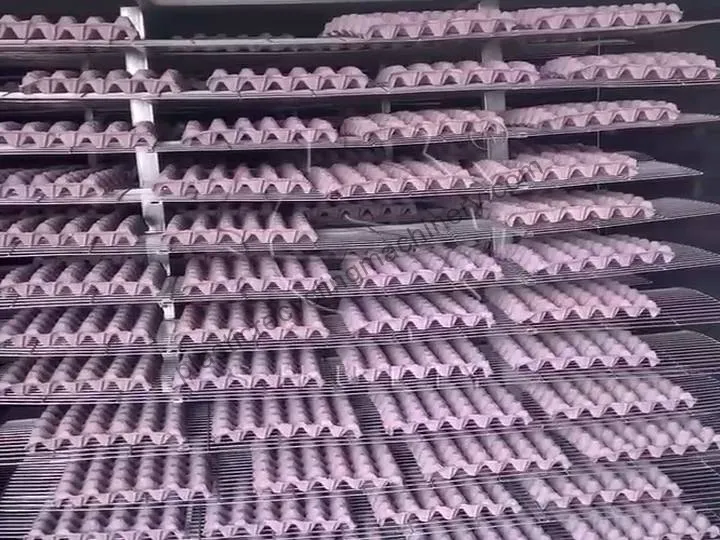
4. Multi-Layer Metal Egg Tray Drying System
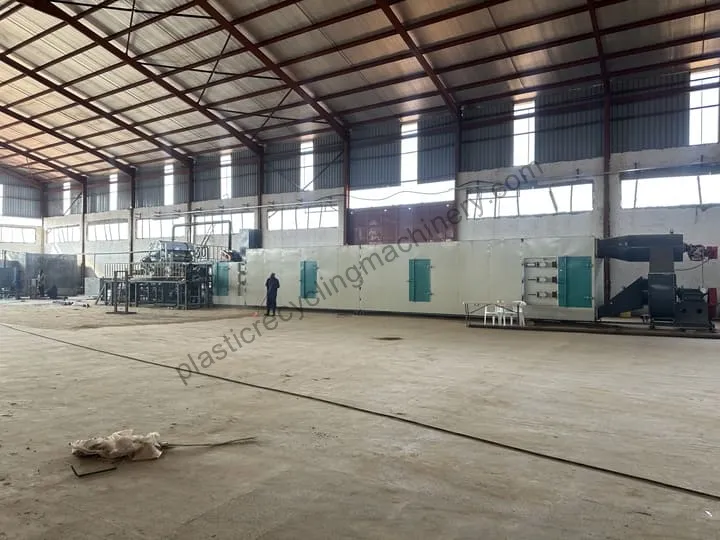
If your factory space is limited but you still want to achieve a relatively high egg tray production capacity, a multi-layer metal egg tray drying system may be more suitable.
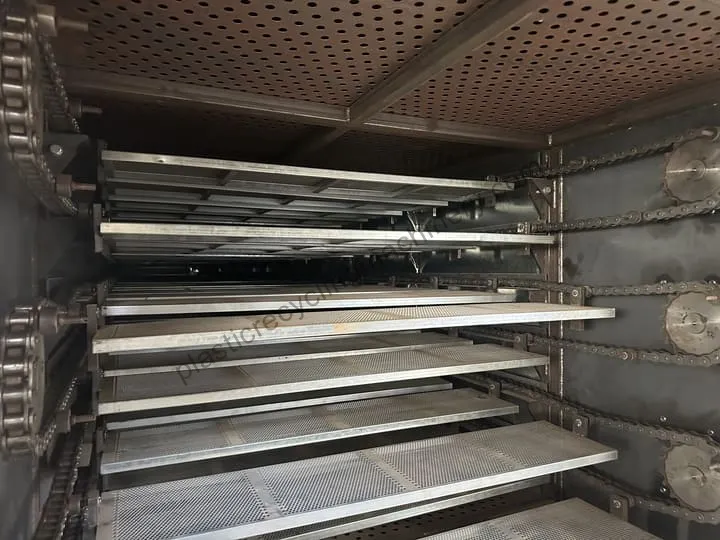
As the name suggests, this drying system uses a multi-layer structure, allowing egg trays to move through different drying levels and making better use of the vertical space in the factory.
For example, a six-layer metal drying system can have a drying time of approximately 25 minutes, with an operating temperature of around 180–200°C.
Advantages of Multi-Layer Metal Drying
- Saves factory floor space
- Makes better use of vertical space
- Suitable for continuous production
- High level of automation
- Suitable for medium and large-scale egg tray production
If your factory space is limited but you require a relatively high production capacity, this type of drying system can be considered.
Egg Tray Drying System Comparison
| Drying Method | Reference Drying Time | Main Energy Source | Space Requirement | Automation Level | Suitable For |
| Sun Drying | Depends on weather | Sunlight & natural air | Large | Low | Small-scale production, suitable climate |
| Drying Box | About 30 min | Heating | Relatively small | Relatively low | Reducing the influence of weather |
| Brick-Built Drying | About 15 min | Coal, wood, natural gas, diesel, etc. | Long | Relatively high | Medium and large-scale continuous production |
| Multi-Layer Metal Drying | About 25 min | Heating | Relatively compact | High | Space saving and automated production |
Not sure which drying system is suitable for your project?
You only need to tell us three things:
- Required production capacity
- Factory length, width, and height
- Available local fuel
We can then help you determine a suitable drying solution.
Egg Tray Drying System for Different Production Capacities
Different egg tray forming machines require different drying configurations.
| Egg Tray Machine Model | Kapazität | Optional Drying Method |
| 3×1 | 1000 pcs/h | Sun drying / Drying box |
| 4×1 | 1500 pcs/h | Sun drying / Drying box |
| 3×4 | 2500 pcs/h | Brick-built drying / Multi-layer drying |
| 4×4 | 3000 pcs/h | Brick-built drying / Multi-layer drying |
| 4×8 | 4000 pcs/h | Brick-built drying / Multi-layer drying |
| 5×8 | 5000 pcs/h | Brick-built drying / Multi-layer drying |
| 6×8 | 7000 pcs/h | Brick-built drying / Multi-layer drying |
Please note that these are general configuration references based on production capacity. The final drying system should also be selected according to the egg tray specifications, forming machine speed, factory space, and local energy conditions.
How Much Space Does an Egg Tray Drying System Need?
Factory space is one of the most common questions customers have when choosing a drying system.
For a multi-layer metal drying system, the approximate space requirements for different production capacities are as follows:
| Egg Tray Machine Model | Length | Width | Heigh |
| 3×1 / 4×1 | 12 m | 3 m | 2.4 m |
| 3×4 / 4×4 | 22.5 m | 6 m | 3.6 m |
| 4×8 / 5×8 | 27.5 m | 6 m | 3.6 m |
| 6×8 | 33.5 m | 6 m | 3.6 m |
A brick-built drying system requires a longer installation area.
Therefore, before purchasing an egg tray drying system, we recommend measuring your factory space first.
If you already have a factory, you can send us the factory dimensions, and we can design the equipment layout according to your available space.
Egg Tray Drying System in a Complete Egg Tray Manufacturing Plant
If you need more than a drying system and are planning a complete paper egg tray production line, the line normally includes the following sections.
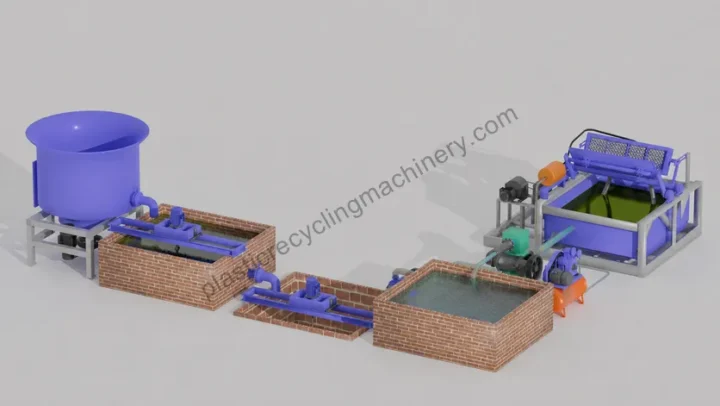
1. Pulping Section
Main equipment includes:
- Pulper
- Pulp Pump
- Agitator
- Pulp Tank
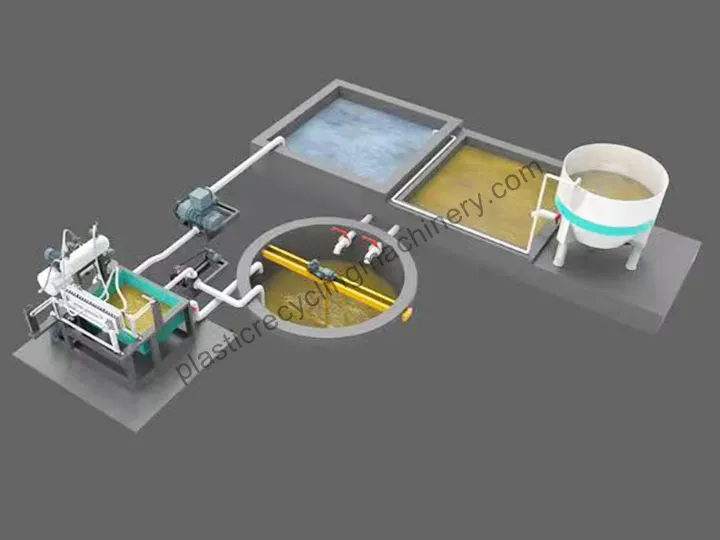
Waste paper and water are processed into pulp through the pulping system. The pulp is then transferred and mixed before entering the forming section.
2. Forming Section
Main equipment includes:
- Egg Tray Forming Machine
- Vacuum Pump
- Air Compressor
The vacuum pump is used for pulp suction and dewatering, allowing the pulp to form egg trays on the molds. The air compressor helps transfer the molded wet trays between molds.
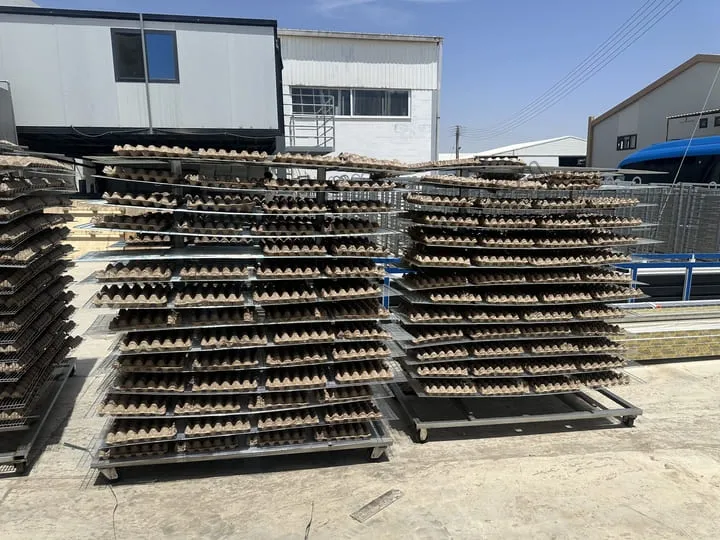
3. Drying Section
Main equipment includes:
- Egg Tray Drying System
- Heating System
- Conveyor or Tray System
- Stacking Machine
The freshly molded wet egg trays enter the drying system and are dried before stacking and packing.
Therefore, a complete egg tray production line can be summarized as:
Pulping → Forming → Dewatering → Drying → Stacking → Packing
Frequently Asked Questions About Egg Tray Drying System
Can egg trays be dried without a dryer?
Yes.
If the local climate is sunny and stable and you have sufficient outdoor space, you can use sun drying.
However, if you need stable year-round production or your area experiences frequent rain, an enclosed or heated drying system is recommended.
Which drying system is suitable for rainy areas?
If your area experiences frequent rain, relying only on sun drying is not recommended.
You can consider an egg tray drying box, brick-built drying system, or multi-layer metal drying system to reduce the impact of weather on production.
Which egg tray drying system saves the most space?
Generally, a multi-layer metal drying system makes better use of vertical space because the egg trays can move through multiple drying levels.
If your factory space is limited, send us your factory dimensions and we can design the drying layout according to your available space.
What fuel can be used for an egg tray dryer?
Depending on the configuration, the heating system can use coal, wood, natural gas, or diesel.
The specific fuel should be selected according to local fuel availability and your operating cost requirements.
Choose the Right Egg Tray Drying System for Your Project
Choosing the right egg tray drying system requires more than simply looking at the dryer itself. You also need to consider your egg tray production capacity, factory space, local climate, labor costs, and available fuel.
If your production capacity is relatively small and the local climate is suitable, you can consider sun drying or a drying box.
If you plan to build a medium or large-scale paper egg tray production line, you can consider a brick-built drying system or multi-layer metal drying system according to your factory layout and automation requirements.
Planning a paper egg tray production line?
Send us the following information:
- Egg tray capacity: __ pcs/h
- Factory dimensions: _ m × _ m
- Egg tray size: __
- Available fuel: __
We can recommend a suitable egg tray drying system and help configure a complete paper egg tray production line according to your project requirements.