
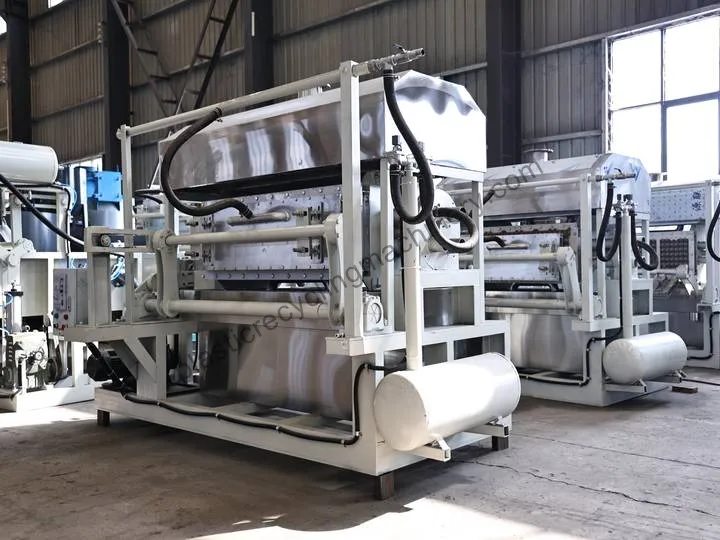
Choosing the right paper egg tray making machine is an important step when starting or expanding an egg tray manufacturing business. The right equipment should match your target production capacity, budget, factory space, and local operating conditions.
As a paper egg tray machine supplier, we provide different machine models and drying solutions to meet different production requirements. In this guide, we will explain the key factors you should consider before making a purchase.
1. Determine Your Required Production Capacity
Before selecting a machine, consider how many egg trays you plan to produce per hour.
Your target output affects the egg tray forming machine model, mold configuration, drying system, and other supporting equipment.
For example, different models offer different production capacities:
| Machine Model | Reference Capacity |
| 3×1 | 1,000 pcs/h |
| 4×1 | 1,500 pcs/h |
| 3×4 | 2,500 pcs/h |
| 4×4 | 3,000 pcs/h |
| 4×8 | 4,000 pcs/h |
| 5×8 | 5,000 pcs/h |
| 6×8 | 7,000 pcs/h |
Note: These are reference figures. Actual output depends on the product specifications, raw materials, and operating conditions.
What Do the Model Numbers Mean?
The numbers describe the mold arrangement on the egg tray molding machine.
- 3×1: 3 molds on one board.
- 4×1: 4 molds on one board.
- 4×4: 4 boards, with 4 molds on each board.
- 6×8: 8 boards, with 6 molds on each board.
If you are starting a small business, a lower-capacity model may be sufficient. If you plan to supply a larger market, consider a paper egg tray making machine with higher output and a matching drying system.
2. Choose the Right Drying Method
Drying is another important factor when selecting a paper egg tray making machine. Freshly formed trays contain moisture and need to be dried before stacking and packing.
The main drying options include:
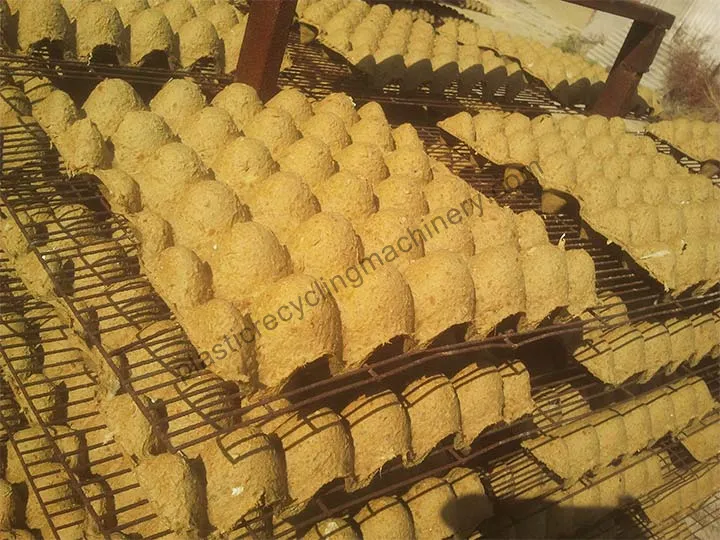
Sun Drying
Sun drying can be considered if you have sufficient outdoor space and a suitable local climate.
- Low equipment investment
- No heating fuel required
- Drying time depends on weather
- Requires more space and manual handling
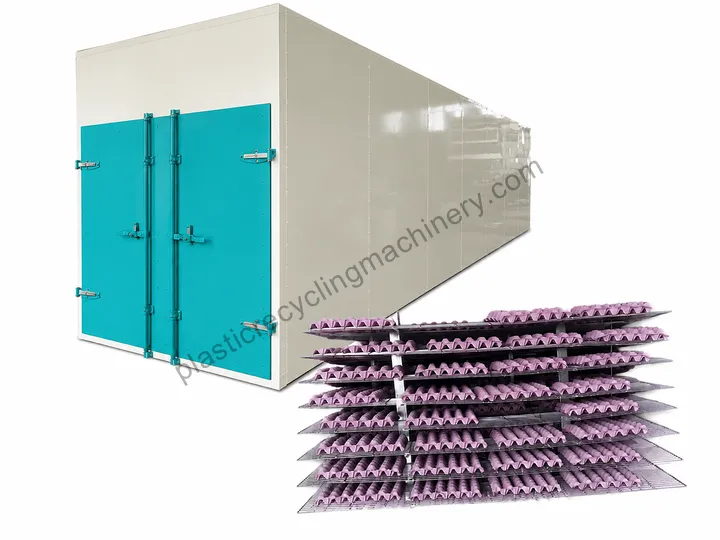
Egg Tray Drying Box
A drying box provides an enclosed environment for drying trays.
- Less dependent on outdoor weather
- Suitable for projects with limited space
- Requires workers to load and unload trays or carts
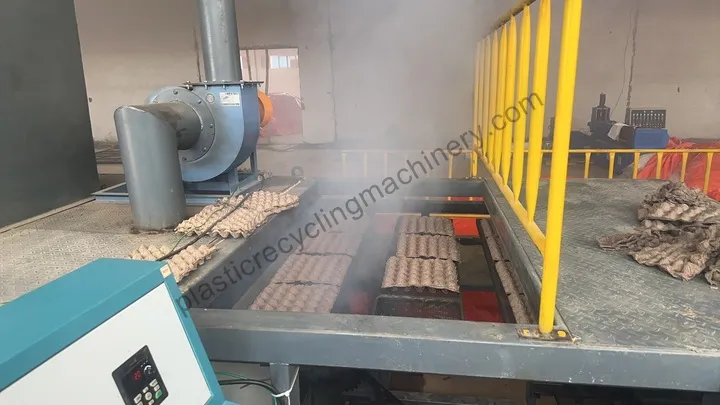
Metal Drying Line
A metal drying line is suitable for continuous production and can be configured for different capacities.
- Supports continuous drying
- Makes use of vertical space in multi-layer designs
- Requires sufficient installation space and a suitable heating system
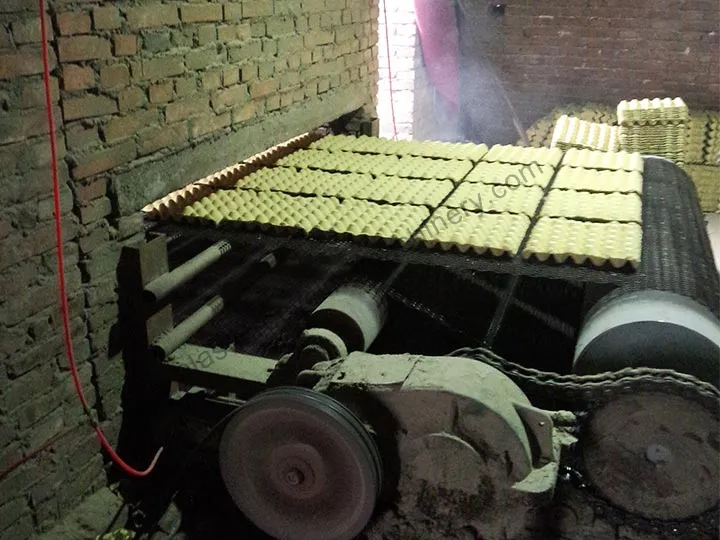
Brick-Built Drying System
A brick-built drying tunnel can be considered for medium and large production projects with sufficient space.
When choosing a drying method, compare your factory layout, local climate, fuel availability, labor costs, and production target.
3. Consider the Available Factory Space
The factory layout affects the installation of both the egg tray forming machine and the drying system.
Before purchasing equipment, measure:
- Factory length and width
- Available installation height
- Space for raw materials and finished products
- Areas for pulp preparation and equipment maintenance
- Space required for drying and product stacking
If your factory has limited floor space, a multi-layer metal drying line may be worth considering. If you have a large outdoor area and suitable weather, sun drying may be an option.
Tip: Share your factory dimensions with your supplier before finalizing the equipment configuration.
4. Check Your Raw Materials
Paper egg trays are commonly made from waste paper and other suitable paper-based materials.
Before choosing a paper egg tray making machine, consider the types and supply of raw materials available in your area.
Common options include:
- Waste paper
- Old newspapers
- Cardboard
- Other suitable paper scraps
The condition and fiber characteristics of the raw materials can affect pulp preparation and the quality of the finished trays. Your pulping system should be selected according to the materials you plan to use.
5. Select the Right Mold and Product Type
Are you planning to produce standard egg trays, egg cartons, or other molded pulp packaging?
Different products require different molds. Before ordering a paper egg tray making machine, confirm the product shape, size, and number of eggs each tray should hold.
Consider the following details:
- Product dimensions
- Number of eggs per tray
- Mold design
- Required product appearance
- Whether you need additional molds for other products
Providing a sample, drawing, or clear product picture can help your supplier evaluate the mold requirements.
6. Decide Whether You Need a Complete Production Line
A paper egg tray making machine is only one part of the manufacturing process. Depending on your production needs, you may require additional equipment.
A typical paper egg tray production line includes:
Pulping → Forming → Drying → Stacking → Packing
The main equipment may include:
- Pulping section: pulper, pulp pump, pulp tank, and agitator
- Forming section: egg tray forming machine, vacuum pump, air compressor, and molds
- Drying section: drying box, metal drying line, or another suitable drying solution
- Finishing section: stacking and packing equipment
For a small project, a simple configuration may be enough. For larger production targets, a more integrated line can reduce manual handling between stages.
Ask your supplier to match the forming and drying capacities so that the drying section can keep up with the forming machine.
7. Compare Equipment Configuration and After-Sales Support
When comparing suppliers, do not focus only on the machine price. Check what is included in the quotation and whether the equipment suits your project.
Important points include:
- Machine model and production capacity
- Included molds and their specifications
- Drying system configuration
- Required voltage and power supply
- Installation requirements
- Spare parts availability
- Installation guidance and technical support
A clear equipment list makes it easier to compare different proposals and avoid overlooking necessary auxiliary equipment.
What information should I provide when requesting a quotation?
Prepare the following information:
- Required production capacity
- Egg tray size and type
- Available factory dimensions
- Local voltage and frequency
- Available heating fuel
- Preferred drying method, if known
These details help the supplier recommend a suitable configuration.
Conclusion
Selecting the right paper egg tray making machine requires more than comparing machine models. You should consider production capacity, raw materials, mold requirements, drying methods, factory space, and operating costs together.
A suitable configuration can help you organize the production process according to your actual business needs.
If you are planning to start or expand an egg tray manufacturing business, send us your target capacity, factory dimensions, and product requirements. We can help you choose a suitable machine model and configure the corresponding pulping, drying, and finishing equipment.